


Dr. Frederick Boop and Dr. L. Madison Michael II of the Semmes Murphey Clinic have long been known to be among the best of the best in their highly complex field of neurosurgery.
Now, the prestigious Senior Society of Neurological Surgeons thinks so, too.
The world's first neurological society, founded in 1920, includes chairmen and residency program directors who train neurosurgeons for the future. As chairman of the neurosurgery residency program at the University of Tennessee, Boop has been a member for more than 20 years.
Last year he nominated Michael for membership. Recently, the society announced his acceptance, giving Memphis two members recognized as being among the very brightest in their field.
"When I became chairman in 2011, Madison became my residency program director," said Boop. "Most of the program directors are invited to sit in on (society) meetings but are not members. To have both the chairman and the program director in membership speaks well for our program."
Michael, who was a college tennis player and volunteer firefighter in college, says his acceptance in the elite neurological surgery society is still sinking in.
"My whole career has been dedicated to the field of neurosurgery and neurosurgical education," he said. "I fully believe in the mission of the Senior Society - to drive the continuing development of the field of neurological surgery, including graduate and post-graduate education. I am incredibly humbled to be a part of this prestigious group. I consider this to be one of the highlights of my career."
Both doctors wear enough hats to stock a millinery shop.
Dr. Boop also is co-director of the Neuroscience Institute and medical director of the Neurosurgical ICU at Le Bonheur Children's Hospital; chief of pediatric neurosurgery at St. Jude Children's Research Hospital; chairman and professor of neurosurgery at UTHSC, and leader of the joint pediatric brain tumor program among the four health systems.
"I was an English major at the University of Arkansas and after I graduated, I got jobs throwing newspapers and painting houses," said Boop, whose father was a neurosurgeon, and started a training program at the University of Arkansas Medical School at Little Rock. "I then went to work as an EEG tech for one of my dad's partners, an epilepsy surgeon. We would go into the operating room where he would put electrodes on the brain, and I would record brain waves. To me that was so fascinating that I wanted to go to medical school.
"At that, my dad's advice was: 'Do something other than medicine. There are a lot of easier things to do in life.' I got into medical school and told him I wanted to be a neurosurgeon and he said, 'Don't do that. There are easier ways to make a living.' His reverse psychology worked perfectly."
Dr. Michael's path to neurosurgery also was not a direct one. He graduated from Sewanee with a degree in natural resources, and then spent the next several years working in forestry and geology. He also was a mountain guide, leading climbing tours in the Western U.S. and in Africa and South America.
Somewhere out in the wilderness, his earlier interest in medicine returned.
"I was in Alaska at the time on a climbing trip," he recalled. "I saw an episode of Northern Exposure, and a light bulb went off. I wanted to be that doctor - a small town doc. Like the rest of my life, though, serendipity followed. In medical school, I was introduced to neurosurgery. I was hooked from the beginning."
|
Birthplace: Memphis Medical School: University of Arkansas Medical School Who/What led you to the medical field: My father was a neurosurgeon and I worked as an EEG tech putting electrodes on the patient's brain to record brain waves. That was so fascinating to me. First place to practice: Arkansas Children's Hospital in Little Rock Biggest Accomplishment: My 35 years of marriage to my wife Lee Ann and our two great kids. My daughter is a nurse in East Tennessee and my son is a neurosurgery resident in Seattle. Interesting Hobbies: Bicycling, on both road bikes and mountain bikes. I love water sports. We have a lake house at Greers Ferry and every chance we get, we like to get away and play on the water. Favorite thing about Memphis: The most attractive thing about Memphis is the people. You can go to big cities all over the world and find impoverished people, find disharmony and so forth. You come to Memphis, and you see food banks, you see shelters, you see so much community support for unfortunate people. There's the medical school here and Le Bonheur taking care of all these poor kids from poor uneducated families getting the same care as the rich people with good insurance. To me that's very attractive. people. There's the medical school here and Le Bonheur taking care of all these poor kids from poor uneducated families getting the same care as the rich people with good insurance. To me that's very attractive. |
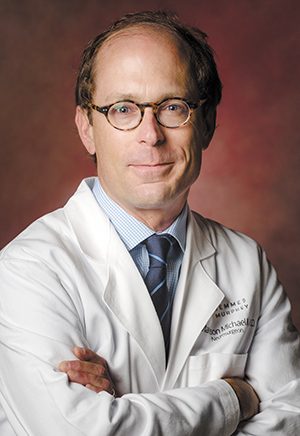 Madison Michael II Madison Michael IIBirthplace: Clarksdale, Miss. Medical School: University of Tennessee College of Medicine What/who led you to the medical field: Two events were crucial. The first occurred during my years as a mountain/climbing guide. That was my first profession. It was necessary to have my W-EMT (Wilderness-EMT) certificate. That exposure to the field of medicine really ignited my passion to pursue it as a career. The second thing was my introduction to Dr. Jon Robertson. Then and now, he has been the person I looked up to as my mentor. He inspired me to pursue skull base surgery as my subspecialty profession. Following the completion of residency, Dr. Boop has been a major influence on my career. (Dr. Robertson was Dr. Boop's predecessor as chairman and was also a Senior Society member.) First place to practice: Memphis Biggest accomplishment: My three boys! Interesting hobbies: Climbing is my passion. Rock, ice, mountains. I have guided and climbed throughout the world. Although a lot slower and with a little more pain, I still climb regularly. Favorite thing about Memphis: I absolutely love Memphis. Every facet. If I had to settle on one thing, it's the people. The Memphis community is an exceptional one. I am proud to be called a Memphian. |
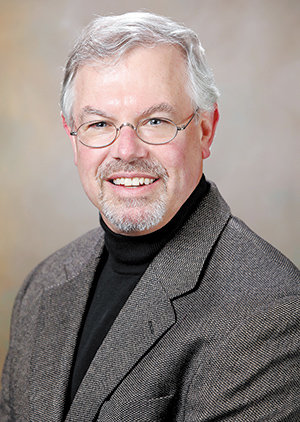 Frederick Boop


